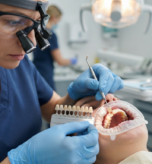
A brighter smile is one of the most common cosmetic dental goals, and teeth whitening has become a popular solution for removing stains and improving the appearance of teeth. Whether you choose an over-the-counter whitening kit or a professional in-office treatment, whitening can produce impressive results for many people.
However, not every type of tooth discoloration responds the same way. If you’ve tried whitening products with little or no improvement, you’re not alone. The reason often lies in the type and cause of the stain.
Understanding why some stains are resistant to whitening can help you choose the right treatment and set realistic expectations for your smile.
Not All Tooth Stains Are the Same
Tooth discoloration generally falls into two main categories: extrinsic stains and intrinsic stains.
Extrinsic Stains
Extrinsic stains affect the outer layer of the tooth, known as the enamel. These are the stains that most whitening treatments are designed to remove.
Common causes include:
- Coffee
- Tea
- Red wine
- Tobacco use
- Dark-colored foods and beverages
- Poor oral hygiene
Because these stains sit on or near the surface of the enamel, professional whitening treatments are often very effective.
Intrinsic Stains
Intrinsic stains develop inside the tooth, beneath the enamel in the dentin layer. Since whitening products primarily work on surface and shallow discoloration, these deeper stains are often much more difficult to treat.
Intrinsic staining may result from:
- Aging
- Tooth injuries or trauma
- Certain medications, such as tetracycline antibiotics
- Excessive fluoride exposure during childhood
- Internal changes after root canal treatment
These stains usually require cosmetic treatments beyond traditional whitening.
Age-Related Discoloration
As we age, our teeth naturally change in appearance.
Over time:
- Enamel gradually becomes thinner.
- The underlying dentin becomes more visible.
- Teeth naturally appear darker or more yellow.
While whitening can brighten age-related discoloration to some extent, it may not completely restore the bright white appearance some patients hope to achieve.
Dental Restorations Don’t Whiten
One of the most common reasons patients are disappointed with whitening results is that crowns, veneers, fillings, and bonding materials do not respond to whitening agents.
If you have:
- Tooth-colored fillings
- Porcelain veneers
- Dental crowns
- Dental bonding
their color will remain unchanged, even after whitening your natural teeth.
If these restorations no longer match your newly whitened teeth, your dentist may recommend replacing them for a more uniform smile.
Some Stains Are Simply Too Deep
Whitening gels contain ingredients such as hydrogen peroxide or carbamide peroxide that break down stain molecules within the tooth.
However, when discoloration extends deep into the tooth structure, whitening products may not be able to reach or fully eliminate the stain.
Examples include:
- Gray discoloration from certain medications
- Darkening after dental trauma
- Internal tooth discoloration following root canal treatment
In these situations, cosmetic alternatives may provide better results.
Over-the-Counter Products Have Limitations
Many whitening toothpastes, strips, and LED kits can improve mild surface stains, but they often contain lower concentrations of whitening agents than professional treatments.
As a result, they may not be effective for:
- Moderate to severe staining
- Long-standing discoloration
- Deep intrinsic stains
Professional whitening performed under a dentist’s supervision is generally stronger, safer, and more effective for eligible patients.
What Are Your Options If Whitening Doesn’t Work?
If whitening treatments don’t achieve the results you were hoping for, don’t assume you’re out of options. Your dentist can recommend cosmetic solutions based on the cause of your discoloration.
Depending on your needs, treatment options may include:
Professional Teeth Whitening
For surface stains, in-office whitening provides stronger whitening agents and faster, more noticeable results than most over-the-counter products.
Dental Bonding
Composite bonding can cover discoloration while also repairing chips or uneven tooth surfaces.
Porcelain Veneers
Veneers are thin porcelain shells placed over the front of the teeth to conceal stubborn discoloration, improve shape, and create a brighter, more uniform smile.
Dental Crowns
If a tooth is severely discolored or weakened, a dental crown may restore both its appearance and function.
Your dentist will recommend the most appropriate treatment after evaluating the cause of the discoloration.
The Importance of a Professional Evaluation
Before starting any whitening treatment, it’s important to have a dental examination.
Your dentist can:
- Determine the cause of your tooth discoloration.
- Identify cavities or gum disease that should be treated first.
- Recommend the safest whitening option.
- Explain whether cosmetic alternatives may provide better results.
This personalized approach helps you avoid frustration and achieve the best possible outcome.
A Brighter Smile Starts with the Right Treatment
Teeth whitening is an excellent option for many patients, but it’s not a one-size-fits-all solution. The success of whitening depends largely on the type of discoloration, the condition of your teeth, and the presence of existing dental restorations.
If your stained teeth haven’t responded to whitening, it doesn’t mean a brighter smile is out of reach. Modern cosmetic dentistry offers a variety of treatments that can address even the most stubborn discoloration and restore your confidence.
Schedule a consultation with your dentist to determine the cause of your tooth stains and explore the treatment options that are best suited to your smile. With the right diagnosis and personalized care, achieving a healthier, more radiant smile is still within reach.